
I’ve just realised my pet is not in my house or yard. I think they are missing – what should I do?!
Pets can go missing for many reasons: jumping out of the car when you’re making a pitstop, running after other dogs while at the dog park, escaping the yard during a thunderstorm, or even an indoor cat finding herself outside, feeling disoriented and hiding somewhere nearby. It’s a terrifying experience to realise that the dog or cat you assumed was at home… is nowhere to be found. 
We regularly get stray pets brought in to the vet reception. With a quick scan of their microchip, we can contact their owners to let them know we’ve found their dog or cat and they can collect them from us. Often, however, these animals are not chipped and we post them to our social media pages in the hope that someone in our wider community identifies them and alerts their owners. If not, they are sent to a designated pet rescue organisation for rehoming.
What would you do if your pets got out of your yard and went missing? In this article, we offer you some well-worn advice and give you the steps to follow should your dog or cat go missing.
Have a strategy before your pet goes missing
If you ‘expect the unexpected’, you won’t feel nearly as helpless as you would if you’re blindsided by your dog or cat suddenly disappearing. There are three important things you can do right now to ensure that if your pet does get lost, you can greatly improve the chances of being reunited with them.
Microchip your pets
You’ve heard it time and time again, so let this be your sign. Microchipping your dogs and cats is the best way to give them permanent identification that links them directly to you. The microchipping procedure is quick, inexpensive and lasts a lifetime. All you have to do is register your address and contact details on the manufacturer’s database and make sure you update your contact details should anything change.
Put a collar with an engraved ID tag on your pet
If you provide a collar and ID tag for your pet and they get lost or go missing, they are more likely to be picked up by a kind-hearted stranger. Firstly, an animal with a collar tells the public that they are a beloved pet, so if someone picks them up, they would be more inclined to try to return the pet. Secondly, an ID tag with your phone number engraved on it will help said stranger to return your pet to you without needing to take them to the vet or shelter to be scanned.
Take photos of your pet
Make sure you have multiple up-to-date photographs of your dogs and cats taken from various angles. If you need to put up a missing-pet poster, these photos can help people to identify your pet’s unique markings, lopsided ears or stubby tail. The more specific you can be about your pet’s appearance, the more likely the public will be to recognise your pet if they spot them at a shelter or wandering about.
Lost pet? Follow this step-by-step guide to get them home
When your dog runs off at the park, jumps out of the car at a petrol station, escapes your yard, or gets lost in the way that some pets do, use this guide to improve your chances of bringing them home.
1. Confirm that your pet is missing
Check small spaces, the garden shed, the car, or your pet’s favourite cosy spot behind the house – if your dog or cat is stuck somewhere on your property, you might assume they are missing. First look in all of the potential hiding places in your yard to make sure your pet really isn’t at home before putting the next steps in motion.
2. Search in an increasing radius around your property
If you have an indoor cat that suddenly finds herself outside, she may become disoriented and quickly find the closest safe space to hide – which may be in a tree in your neighbour’s yard. Similarly, your dog may be terrified of an afternoon thunderstorm and escape your yard, only to go and hide under a bush a few houses away. Stay calm, crouch low and call their name in a neutral voice as you walk the neighbourhood. A panicked owner trying to chase after a frightened pet is not going to yield positive results in trying to get that pet home again.
As you expand your search, make sure there is someone at home in case your pet returns while you are out looking for them. Leave a gate, door or window open for your dog or cat, so they can get in and not go wandering off again.
3. Tell your neighbours
If your pet’s last known location was your home, let all of your neighbours know that your pet is missing. It would be useful to communicate to everyone on your neighbourhood WhatsApp group: post a photo with your pet’s name, breed, age, specific markings and if they are wearing a collar. Include their last known location and any additional useful information.
Similarly, if your pet is missing from a different location, alert as many people as possible in the area your pet got lost, to please be on the lookout for your dog or cat.
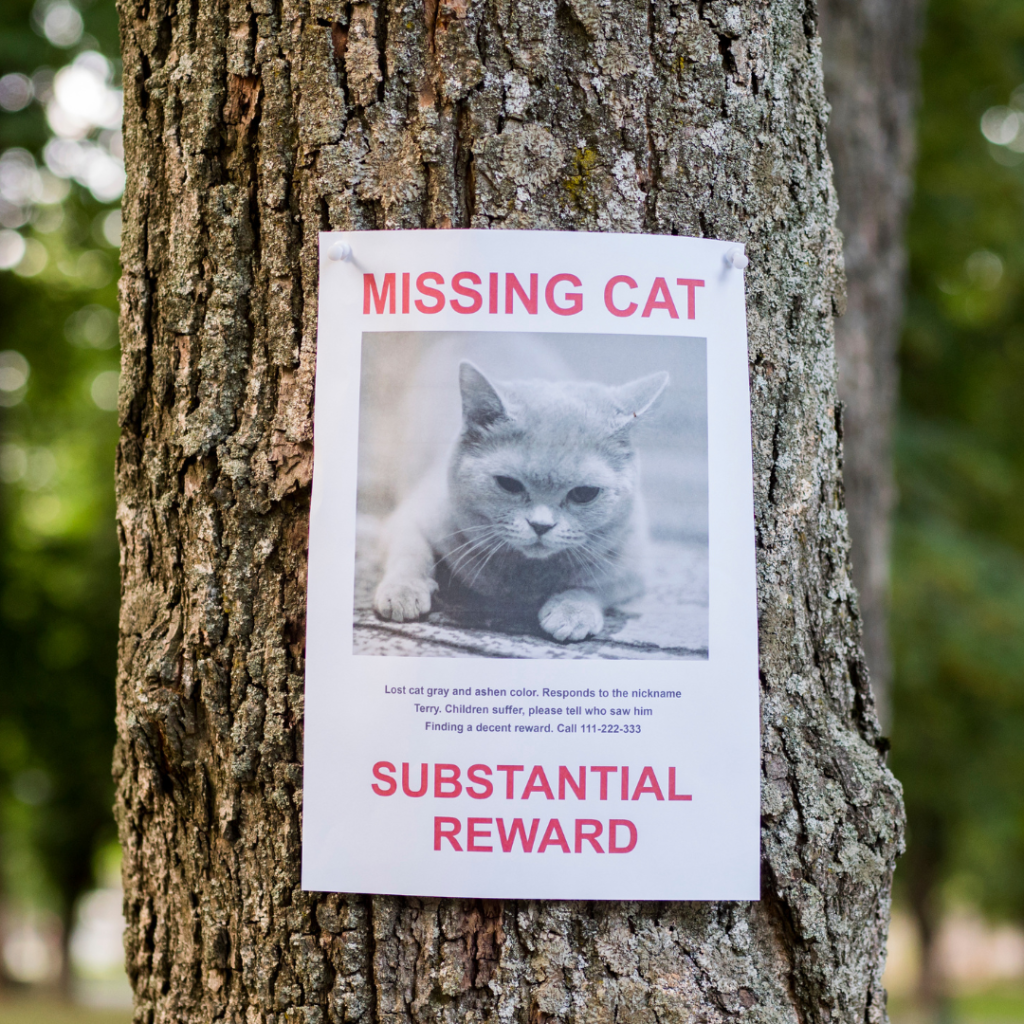
4. Make a MISSING poster for social media
Make a visually-impactful poster to share on social media. At the top, use a large font to say MISSING DOG or MISSING CAT and include the following details:
- their name
- a clear photo and detailed description
- where they went missing
- your name and contact details
You can include a reward to motivate your pet’s safe return, but be aware of the potential for being scammed (see below). Share the poster widely on all the groups for your area, city or specific location. If someone contacts you to say they have your missing pet, do not pay any money until your dog or cat is safely back in your care.
5. Log in to the microchip database
When you had your pet microchipped, you would have logged into the manufacturer’s pet registry to capture or update your details. The top South African pet microchip registries have an SOS or missing pet service that alerts nearby vets and pet rescues that a dog or cat is missing in their area, so they know to keep an eye out for the animal. When you log in to the microchip database to trigger the alert, use the opportunity to also confirm your home address and contact details.
6. Put up posters of your missing pet
Not everyone is on social media, nor is it a guarantee they will see your post about your missing pet. Expand your physical reach by printing out some MISSING PET posters to stick up at your local shops and outlets. Ask local security guards and neighbourhood patrol vehicles to look out for your pet. Place your poster at local animal shelters and SPCAs, and ask garden services employees to look out for your pet when they are maintaining gardens in your neighbourhood.
7. Visit the vet clinic, local rescues and SPCAs
Members of the public may have reported seeing your missing pet (as a stray) or may have picked them up and taken them to a shelter or brought them into the vet. These are busy, high-traffic organisations, so it’s important that you visit them every day to physically check for yourself that your dog or cat is not there. If your pet is microchipped and you’ve activated the missing pet SOS or alert, they will know to look out for a missing dog or cat, but the onus is still on you to do the proactive searching. Don’t wait for a phone call – go and look every day.
8. Lead your pet home by the nose
Some cats are known to go AWOL for a few days and return like nothing happened. Many cat owners will have a story about their cat disappearing for a week or two and then suddenly reappearing through the cat door, but the longer they are missing, the more likely it is that they won’t return on their own. When you realise your pet is missing, try to draw them home again by placing strong-smelling food at entry and exit points of your yard.
For dogs, leave side gates and pet doors open and make sure someone is at home to ‘receive’ your four-legged Houdini. Put their dog bedding or worn items of your clothing outside or at the place they went missing. If they are confused and afraid, a familiar smell will be comforting to them and they are more likely to be lured back to an object that smells like home.
9. Get third-party help
If you think your pet is trapped, stuck or injured somewhere, there are professional pet location services that use sniffer dogs and even drones with thermal imaging technology to find missing pets. Remember to only use official communication channels to recruit their services and not be duped into fraudulently paying for services that don’t exist.
10. Let everyone know when your pet comes home
When your pet goes missing and you spread the word to enlist everyone’s help to get your pet home, it becomes a community effort. When people see and share your online post or take note of a stray dog or cat they think could be yours, they want to know the outcome – especially if it’s positive! When your dog or cat is found and they are safely home again (or even if it’s unhappy news), update your social media post and spread the news on the same WhatsApp groups you used to share the original call for help. Provide some details of how your pet made it home – people love animals and will be invested in a positive outcome for your missing pet.
What not to do when your pet is missing
- Don’t chase your pet – lure them — If you see your missing pet loose and out in the open, don’t chase them. They will most likely be in survival mode and will potentially be spooked by someone running after them. Have a plan to get them to come to you: high-value treats like chicken or biltong for dogs, or a sachet of rich cat food for cats, can act as a food lure. Keep calm. Stay low to the ground so as not to appear threatening, and say their name in a neutral voice.
- Don’t lose your good judgement — Unfortunately, there are many scammers who have no qualms about preying on desperate, vulnerable people whose pets are missing, especially when a reward is on offer. They will alter images of the lost pet to infer that they have ‘rescued’ your dog or cat. When they send you the images, they demand payment of the reward before sharing their location with you to come and collect your pet. A good person who wants to reunite you with your pet would never do this. Do not pay any money without first taking possession of your pet.
- Don’t give up — Anything can happen. There have been some miraculous stories of pets simply wandering home on their own, or being reunited with their owners months or years after going missing. Do what you can now to mitigate the risks of your pet going missing and to improve their chances of being found and coming home.
© 2026 The Code Company